Monday, March 21, 2022

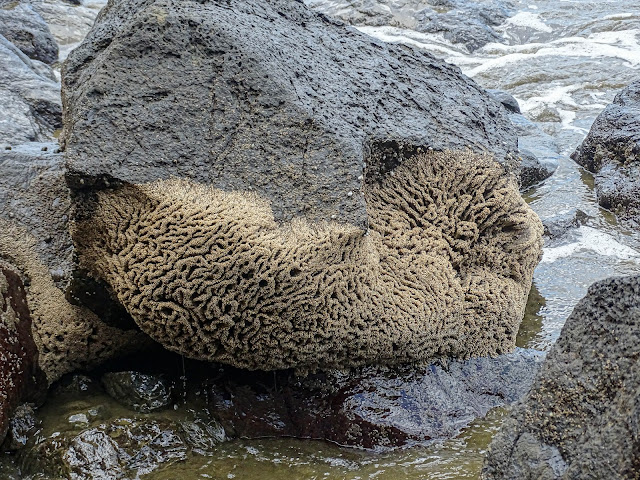
Coralline Algae?


 My best guess as to what this is, is coralline algae. Here is an explanation of what this might be from Wikipedia: Coralline Algae

Coralline algae are red algae in the order Corallinales. They are characterized by a thallus that is hard because of calcareous deposits contained within the cell walls. The colors of these algae are most typically pink, or some other shade of red, but some species can be purple, yellow, blue, white, or gray-green. Coralline algae play an important role in the ecology of coral reefs. Sea urchins, parrot fish, and limpets and chitons (both mollusks) feed on coralline algae. In the temperate Mediterranean Sea, coralline algae are the main builders of a typical algal reef, the Coralligène ("coralligenous"). Many are typically encrusting and rock-like, found in marine waters all over the world. Only one species lives in freshwater. Unattached specimens (maerl, rhodoliths) may form relatively smooth compact balls to warty or fruticose thalli.

If you have a better guess, let me know. Oh, this photo was taken on the Pacific side of Costa Rica.  

Saturday, March 19, 2022

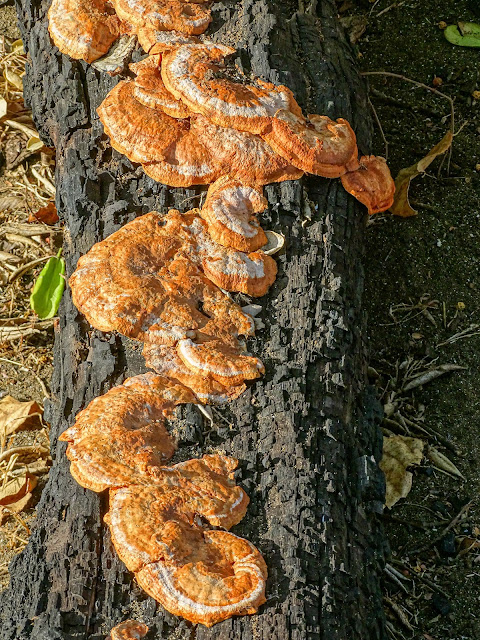
Shelf Fungi in Costa Rica


As I travel around the world, I am always surprised to find things that are familiar and remind me of home. I have always been fascinated by shelf fungi. Here is a short explanation of this interesting fungus from Wikipedia: Polypore

Polypores are a group of fungi that form large fruiting bodies with pores or tubes on the underside (see Delimitation for exceptions). They are a morphological group of basidiomycetes-like gilled mushrooms and hydnoid fungi, and not all polypores are closely related to each other. Polypores are also called bracket fungi or shelf fungi, and they characteristically produce woody, shelf- or bracket-shaped or occasionally circular fruiting bodies that are called conks.

Most polypores inhabit tree trunks or branches consuming the wood, but some soil-inhabiting species form mycorrhiza with trees. Polypores and the related corticioid fungi are the most important agents of wood decay, playing a very significant role in nutrient cycling and carbon dioxide production of forest ecosystems.

Over one thousand polypore species have been described to science, but a large part of the diversity is still unknown even in relatively well-studied temperate areas. Polypores are much more diverse in old natural forests with abundant dead wood than in younger managed forests or plantations. Consequently, a number of species have declined drastically and are under threat of extinction due to logging and deforestation.

Friday, March 18, 2022

Looking Back at a Sunset in Costa Rica


The year prior to the pandemic, we were able to travel around the United States and include a trip to Costa Rica. Hopefully 2022 will allow us the opportunity to travel again. 

Thursday, March 17, 2022

What is it? #2


What do you think this is? You might guess that it is some form of mold or other strange plant. Check below to see if you were right. 


Answer: It is ice cream on the lid of the container. 

Wednesday, March 16, 2022

What is it? #1


 Animal, vegetable, or mineral? What is your guess as to what this is? I will give you a hint. The image has not been changed except for exposure and some detail. 


Answer: It is a salt deposit on a granite countertop. 

Saturday, March 12, 2022

A Heron Hotel


This is a large bird nesting structure at the Farmington Bay Waterfowl Management Area just east of the Great Salt Lake in Utah. Bird watching is a major avocation around the United States. I am certain that people come here just to watch the birds. These birds are Great Blue Herons or Ardea herodias. Interestingly, some varieties of these birds are white great blue herons. When they are white, they are called Great White Herons. I saw my first great blue heron when I was riding in a boat on Saguaro Lake on the Salt River in Arizona. 

Friday, March 11, 2022

Wading Among the Ducks


You can see how shallow the water is in this image taken in Farmington Bay, next to the Great Salt Lake. This is a huge freshwater drainage area for the Farmington Creek. Lake levels have been dropping because of the year's long drought. The birds are in the Farmington Bay Waterfowl Management Area. This is an excellent spot for bird watching.